

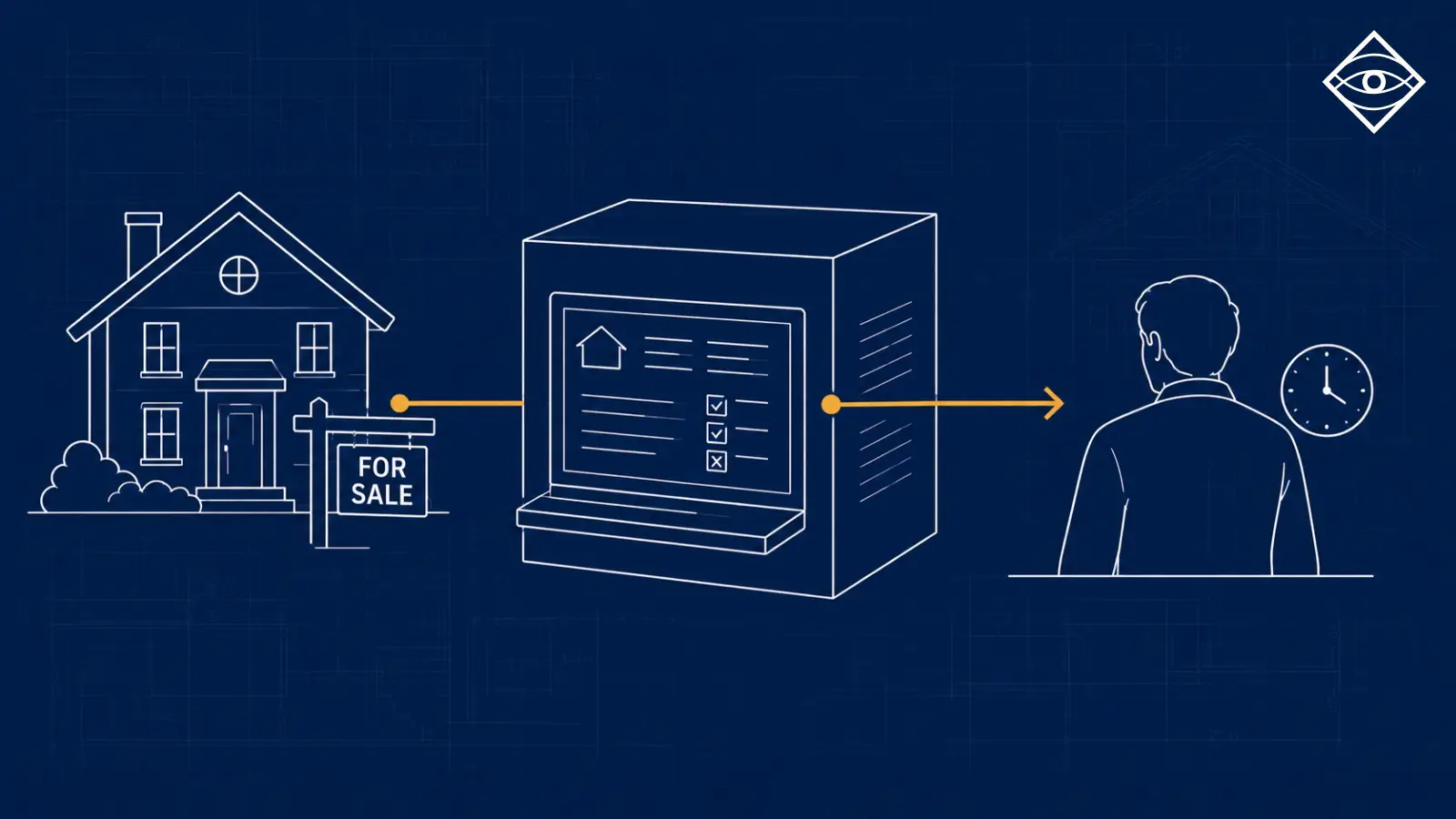
There is a moment that plays out in condominium communities across the country every week.
An owner accepts an offer on their home. The inspection goes well. Financing is pre-approved. Closing is scheduled. Everyone assumes the transaction is moving toward the finish line.
Then the lender asks one more question — not about the buyer, not about the seller, but about the association. Does the condominium “project,” as Fannie Mae and Freddie Mac categorize the community, meet the requirements for the loan to be sold to either company?
Sometimes the answer comes back almost immediately, and nobody thinks about it again. Sometimes it doesn’t.
The lender discovers the project has an “Unavailable” status. An engineering report identifies critical repairs that haven’t been addressed. The reserve study shows significant unfunded obligations. The insurance program no longer meets current lending requirements.
Suddenly, a mundane real estate transaction that had nothing to do with the board has everything to do with the board.
Loses financing. A pre-approved loan may no longer move forward.
Loses a sale. A signed transaction can unravel before closing.
Last to learn and cannot resolve the issue alone.
The lender walks away. The board, meanwhile, has no idea any of this happened; it is the first party to be blamed, the last to learn, the most steps removed from the problem, and unable to resolve it quickly or on its own.
That’s one of the least understood consequences of the years following the June 24, 2021, collapse of Champlain Towers South in Surfside, Florida. The collapse transformed structural engineering. It transformed reserve funding. Quietly and almost unnoticed, it’s transforming mortgage underwriting.
What the building’s condition reveals.
Whether the community can address what it reveals.
How both affect a unit owner’s financing.
The first two changes are now reasonably well understood. Most volunteer directors at least know that structural inspections have expanded, and some have experienced the consequences firsthand after authorizing them. Many are also confronting more stringent reserve-funding requirements adopted by states and localities since the collapse.
Far fewer realize that the same forces are now reaching individual real estate transactions. Many boards are already exhausted from structural inspections and reserve-funding changes. Now their decisions about maintenance, reserves, inspections, and repairs also shape whether owners can sell their homes, refinance existing mortgages, or attract conventional buyers.
That isn’t because Fannie Mae and Freddie Mac intentionally decided to regulate community associations. It’s because the questions they are now asking effectively put the building’s eligibility before the borrower’s, whether or not any lender’s workflow officially says so.
The collapse forced an uncomfortable realization: a mortgage can be perfectly underwritten — excellent credit, documented income, a conservative debt ratio — and none of it matters if the collateral itself is deteriorating.
That doesn’t mean every aging condominium suddenly became risky, or that Fannie Mae and Freddie Mac are suggesting or have concluded that volunteer boards are incapable of governing their communities. It means stable operations today no longer settle the question of whether a condominium will remain financially and physically healthy over the full term of a mortgage. That distinction helps explain why the policy changes arrived in stages rather than all at once.
Policymakers made changes in stages as they learned that stable operations today don’t ensure stability for the full term of a mortgage.
Immediately after the building collapsed, nobody knew exactly what long-term reforms would be necessary. Investigations had barely begun. Engineering failures were still being analyzed. States were only beginning to debate inspection laws, and reserve funding requirements varied dramatically across the country.
Rather than rewrite condominium underwriting overnight, Fannie Mae understandably issued temporary guidance. In October 2021, its Lender Letter LL-2021-14 instructed lenders to begin identifying projects with significant deferred maintenance, structural deficiencies, evacuation orders, or known unsafe conditions. It also suspended the flexibility that had previously allowed some projects to fund reserves below the standard minimum percentage when supported by a professional reserve study, while broader questions were being resolved.
The message wasn’t that every condominium had become dangerous. It was that uncertainty itself had become a lending risk.
Two years later, that temporary guidance evolved into something far more detailed. Selling Guide Announcement SEL-2023-06, issued July 5, 2023, and implemented by lenders beginning September 18, 2023, made many of the temporary guidance’s broad concepts permanent through its newly specified underwriting standards. Instead of asking whether problems generally existed, lenders now had to review:
That threshold deserves attention. For the first time, underwriting treated deferred repairs not merely as maintenance issues recorded on the balance sheet, but as measurable financial obligations that could increase mortgage risk. The question was no longer only whether a building needed repairs. It was also whether the association had demonstrated the financial capacity to complete them.
The next change arrived in March 2026. Fannie Mae’s LL-2026-03, together with Bulletin 2026-C, Freddie Mac’s corresponding guidance, announced two significant changes.
Beginning August 3, 2026, when certain condominium projects use a reserve study to meet Fannie Mae or Freddie Mac reserve requirements, the study’s funding recommendation can no longer use a baseline funding method. A current reserve study will remain an alternative to the fixed percentage test, but the association must budget in accordance with the study’s qualifying funding recommendation.
Then, effective January 4, 2027, the standard minimum reserve contribution requirement will increase to 15 percent from 10 percent.
October 13, 2021
Lender Letter LL-2021-14 instructs lenders to identify projects with significant deferred maintenance, structural deficiencies, evacuation orders, or known unsafe conditions. It also suspended flexibility to fund reserves below the standard minimum percentage in certain circumstances.
July 5, 2023
Selling Guide Announcement SEL-2023-06 instructed lenders, beginning September 18, 2023, to review structural inspection reports completed within the last three years, documentation of critical repairs, material deficiencies, litigation involving structural issues, and, for the first time, unfunded repair obligations exceeding $10,000 per unit.
March 18, 2026
Fannie Mae’s Lender Letter LL-2026-03 and Freddie Mac Bulletin 2026-C tie reserve funding, reserve studies, and baseline-funding practices directly to condominium project eligibility.
August 3, 2026
Beginning August 3, 2026, when certain condominium projects use a reserve study to meet Fannie Mae or Freddie Mac reserve requirements, the study’s funding recommendation can no longer use a baseline funding method — a method that allows reserve balances to approach, but not fall below, zero.
January 4, 2027
The minimum replacement reserve allocation increases from 10% to 15% of a project’s annual budgeted assessment income.
Looking at the last five years, changes that seemed to meander at the time now reveal a clear progression. Each stage was built on the previous one. None replaced it.
Focused initially on health, safety, and well being of residents of the community.
Identified and documented problems that remained unresolved.
Evaluated the association’s financial capacity to address problems before they became crises.
There’s a practical reason the third rollout is harder than the ones before it. Banks run their underwriting on proprietary systems, some of them decades old.
I once ran a project that modernized a mainframe application written in 1977. Before that overhaul, changing a single character in that system required a 12-week approval cycle.
Moving a screening question earlier in a bank’s underwriting sequence isn’t a policy update. It’s an engineering project, and it can take years to reach every lender.
A clear breakdown of the legislative origin of inspect-study-fund requirements, how mortgage eligibility rules can stall financing for buyers even mid-repair, and why documentation is a board’s strongest protection.
For decades, few owners ever thought about Fannie Mae or Freddie Mac. Why would they? Their relationship was with their lender, not the secondary mortgage market.
When someone closes on a mortgage, the originating lender will often sell that loan in the secondary market. The sale replenishes the lender’s capital, transfers part of its long-term risk, and allows it to make additional loans.
Providing that liquidity, of all unglamorous things, is one of the mortgage market’s most important functions. It is also one of the most consequential. If a condominium loan cannot be sold because the project fails eligibility requirements, the lender may have little incentive to originate it.
If a mortgage cannot be sold because the project fails eligibility requirements, the lender may have little incentive to originate it.
What appears to be a routine institutional underwriting decision, however, often has a deeply personal outcome for people. A decision made on an ordinary Tuesday becomes a seismic shift for the owner whose buyer loses financing, whose refinance stalls, or whose building is suddenly deemed ineligible.
The gap between those two conversations is profound in both its emphasis and impact. For decades, monthly maintenance fees reassured lenders that an association could meet its ongoing obligations. Today’s underwriting asks a different question.
Is the association collecting enough money today to maintain the building tomorrow? The distinction sounds subtle. The consequences aren’t. Reserve contributions aren’t viewed simply as accounting entries. Increasingly, those contributions are evidence that an association is preparing for future obligations instead of postponing them.
One frustration expressed by boards, managers, attorneys, and owners alike is that condominium-project eligibility can feel opaque. In important ways, it remains a multi-party process. Fannie Mae provides the clearest view into how the process works because its Condo Project Manager, or CPM, and Condo Status Finder, or CSF, make the lender- and board-facing sides visible, while Freddie Mac’s aligned project standards show the issue is not confined to one company.
Fannie Mae’s CPM is a lender-facing system used during condominium-project underwriting. It allows lenders to review existing Fannie Mae eligibility decisions, see applicable delivery restrictions, and certify eligible projects where lender review is permitted. If Fannie Mae has already made an eligibility decision, lenders generally rely on that decision unless they have updated information to submit.
Boards do not ordinarily work in CPM. They see the consequences of its status decisions when a lender’s underwriting process encounters a problem.
In contrast, Fannie Mae’s CSF gives associations, management companies, and authorized advisors a board-facing entry point. It does more than return a single status. When Fannie Mae identifies ineligible conditions, CSF identifies the eligibility requirement at issue and provides a brief description. It also gives the association a way to contact Fannie Mae and submit updated information or documentation when a condition has changed, or the available information is inaccurate.
That is useful transparency, but it’s not the same thing as project approval.
A “No findings” result means only that Fannie Mae has found the project record and has not currently identified it as ineligible. It does not mean the project has been reviewed or approved. Lenders remain responsible for the project review required during loan underwriting when an existing Fannie Mae approval does not apply.
For a board trying to solve an eligibility concern, the work can still involve management, counsel, engineers, insurance professionals, and lenders. No single screen can replace that analysis.
Fannie Mae’s online tool for HOAs, management companies, and authorized advisors to check whether Fannie Mae is aware of project conditions that may affect eligibility.
Each CSF search returns one of three results:
If the tool finds more than one project that matches the search term, it asks users to pick the right one before displaying a result.
Ineligible conditions identifies the eligibility requirement at issue and provides a brief description. No findings does not mean the project has been reviewed or approved.
Fannie Mae’s tool for lenders, not boards. Lenders use it to check a project’s status and determine whether the project meets Fannie Mae’s requirements.
CPM tells a lender three things:
If a project shows an Unavailable status, the lender can’t approve it in CPM. Instead, the lender gets a message explaining why — the same reasons a board would see if they ran their own search in CSF.
If Fannie Mae hasn’t already made a decision on the project, the lender reviews it on their own and records that decision in CPM.
One statistic appears repeatedly in articles, LinkedIn posts, webinars, and conference presentations: 3.6%. It’s usually presented as reassuring — “only 3.6% of condominium associations are affected.” Except that’s not what the number reports.
As of August 2025, Fannie Mae reported that 3.6 percent of condominium projects had an “Ineligible” status. That number does not tell us what percentage of all condominium associations, all condominium projects, or all mortgages nationwide are affected.
3.6%
of condominium projects had Fannie Mae’s “ineligible” status.
As of August 2025.
Source: Fannie Mae, “Condo Status Finder user guide,” accessed July 20, 2026. The figure describes Fannie Mae’s project-status data; it is not a percentage of all U.S. condominium associations.
Fannie Mae’s public page identifies the figure as the share of condominium projects with an “ineligible” status. It does not say how many projects are in that universe, how often their status is reassessed, or how many individual units they represent.
In formal advocacy materials dated July–August 2025 to the Federal Housing Finance Agency, or FHFA, Community Associations Institute CEO Dawn Bauman cited approximately 5,400 associations, affecting over 1 million homeowners. Fannie Mae has not publicly confirmed or challenged those figures, steadfastly reporting only its 3.6% statistic.
Regardless of the actual statistics, the problem is not small. The official 3.6% figure, which cannot be corroborated because Fannie Mae does not disclose the size or composition of the project population used to calculate it, combined with CAI’s uncontested estimates, defines what we actually know, what we don’t, and how we operate in a swamp of ambiguity — one of the core components of The Well-Run Building program, and worth applying here as much as anywhere else.
Another common misconception is that litigation is the primary reason projects lose eligibility. Several years ago, that may have felt true. Today it doesn’t. Fannie Mae’s published guidance increasingly focuses on something much simpler: “Can this building show it’s structurally sound, adequately insured, and financially capable of maintaining itself?”
Fannie Mae has said the top two reasons a project gets flagged are, by far, not having enough building insurance and unresolved critical repairs. Beyond those two, a handful of other issues can also trigger it — deferred maintenance, open inspection findings, thin reserves, and litigation — but Fannie Mae hasn’t published how those rank against each other.
That ranking matters because it reflects a meaningful change in what lenders examine. Litigation once served as a useful proxy for problems that might not otherwise appear in routine financial documents. Current underwriting asks more directly about the underlying risks: whether structural concerns exist, whether required work remains unfinished, whether insurance is sufficient, and whether the association has a credible funding plan. Annual budgets and audited financial statements still matter, but they are increasingly considered alongside reserve studies, engineering reports, funding practices, and capital plans.
Underwriting of conventional mortgages for condos has become more sophisticated since the collapse of Champlain Towers South in 2021, and boards, owners, buyers, and sellers, are just now starting to feel its effects.
At the condo I led for 12 years, we pushed a $3.5 million roof replacement into an emergency review process after a 10-month permit delay. Not because the building was in danger, but because the city’s historic-preservation board was stuck on three shades of beige.
That’s what “critical” feels like from inside a boardroom: urgent, expensive, and completely out of your control. When roofs have to be replaced in warm weather, active water leaks are costing real money to repair, and bureaucracy makes routine projects painful.
That’s not what “critical” means to Fannie Mae. Its definition is narrower, and it has nothing to do with cost, disruption, or how long a board has been fighting for a permit. It’s about safety and soundness — whether the building is structurally sound enough to serve as loan collateral today, not whether there are active leaks, frustrated owners, or the board is exhausted.
Boards think ‘urgent, expensive, and out of control’; Fannie Mae frames it as loan collateral.
Something that feels expensive and urgent to a board may not create a Fannie Mae project-eligibility problem. Conversely, a condition that seems comparatively mundane — because it is less visible, less contentious, or less immediately costly — may still matter if it affects the project’s safety, soundness, structural integrity, habitability, or common amenities.
That distinction matters. Well-run boards remain focused on resident safety, the condition of their shared property, and their fiduciary obligations. They also use Fannie Mae’s CSF to monitor whether Fannie Mae is aware of project conditions that could affect eligibility — and understand that a result with no findings is not the same as an approval.
Otherwise, a board can spend months bracing for a mortgage-eligibility problem that was never actually coming — or overlook a condition that genuinely requires attention because it arrived without the cost, disruption, or public drama the board associates with a crisis.
The Foundation for Community Association Research‘s January 2025 Snap Survey offers one of the clearest pictures currently available. The survey included 310 respondents representing more than 57,000 communities across 38 states and the District of Columbia. Several findings stood out immediately:
One unsurprising finding deserves equal attention: 71 percent of respondents expressed concern about potential liability when answering lender questionnaires on matters beyond their expertise, which is reassuring rather than alarming, as it suggests they are aware of the potential financial and reputational risk to their communities.
Lender questionnaires may look administrative, but inaccurate answers can affect a purchase, sale, or refinance. Paying an attorney, an engineer familiar with the property, or both, to review technically sensitive responses once or twice a year is a modest cost compared with the financial and reputational consequences of providing incorrect information. Associations facing active litigation or significant repairs have even more reason to involve the appropriate professionals.
reported mortgage-approval delays tied to evolving condominium lending requirements.
expressed concern about potential liability when answering lender questionnaires.
Cause
Percentage of respondents
Insurance-deductible requirement
20%
Reserve-funding shortfalls
17%
Ongoing structural maintenance projects
12%
Litigation
6%
Source: Foundation for Community Association Research’s January 2025 Snap Survey. The survey included 310 respondents representing more than 57,000 communities across 38 states and the District of Columbia.
Years before I began consulting with boards, I had a conversation that didn’t seem important at the time.
Our association needed financing to purchase housing for an on-site superintendent. As the community’s first owner-elected board president, I was advised to sign the commercial loan documents.
During the process, the banker explained something I’d never considered: The number of banks that lend to condominium and cooperative associations was relatively small. But among those who did in 2013, association lending was viewed as unusually stable. Hundreds of owners paying monthly common charges equated to a predictable stream of income, making community associations attractive borrowers despite their unusual governance structures.
At the time, that explanation made perfect sense, and it still does. Today, however, I hear it differently. Monthly maintenance fee income still matters. Owners continue paying common charges, associations continue adopting budgets, and lenders continue treating that recurring revenue as evidence of financial stability.
The operating budget no longer carries the argument by itself.
The difference is that the operating budget no longer carries the argument by itself. Lenders are looking farther ahead, comparing current reserve contributions with the building’s documented condition, anticipated repairs, and long-term capital needs.
The answer to “Is money coming in every month?” will usually be yes. The harder issue is whether the amount being collected bears any credible relationship to the work the building will require.
That’s a much finer point than it first sounds. If the measuring stick is based largely on the stability over the last 40 years, the answer may be “Yes,” after a pause to calculate the risk. If the measuring stick factors in all the lessons learned since June 24, 2021, the most honest answer may be, “I don’t know.”
That shift helps explain why reserve studies are the center of attention. Once largely the province of community association treasurers, their budget and finance committee chairs, prospective buyers, and other people with need-to-know, the humble, hardworking reserve study, an internal document for years, is suddenly the most valuable piece of evidence to support — or undermine — the assumptions lenders make about the future condition of the collateral securing thousands of mortgages.
Structural Reports Don’t Protect Buildings. Coordinated Action Does. argued that engineering reports create knowledge. The Reserve Study Is Evidence. What a Board Does With It Is Governance. showed how reserve studies translate that knowledge into financial planning.
Mortgage underwriting introduces a third question: Did the association act on what those documents showed? Lenders do not answer that question for the board. They increasingly evaluate the evidence the board’s decisions leave behind.
Notice what hasn’t changed. Fannie Mae has never announced its intention to regulate community associations. It hasn’t claimed expertise in reserve studies, nor has it suggested it should replace engineers, reserve specialists, attorneys, or boards.
Instead, the underwriting questions have simply grown more demanding.
Twenty years ago, annual budgets and financial statements satisfied most questions.
Today, they are often merely a starting point for community association lenders, rather than the end. If reserve contributions appear unusually low, or even too stable, it begs questions, and lenders ask why. If engineering reports identify critical repairs, lenders ask whether those repairs are funded. If major projects remain unfunded, lenders ask whether future owners inherit risks today’s budgets don’t reflect.
Markets can shape behavior without passing a law.
None of those questions tells a board how to govern. They determine whether the secondary mortgage market is willing to purchase loans secured by homes inside that community. That distinction matters. The GSEs are not condominium regulators, yet their underwriting standards increasingly function as de facto national market standards. Lenders follow them because access to the conventional secondary mortgage market depends on them. Markets can shape behavior without passing a law.
One unfortunate reality of the current lending environment is that boards often discover problems only after an owner has already accepted an offer.
By then, everyone’s operating under a deadline — the buyer has scheduled an inspection and an interest-rate lock may expire; attorneys, real estate agents, title companies, and the lender have underwriting well underway; the seller is making moving plans — and the board suddenly finds itself answering questions it’s never seen before.
That’s exactly backwards.
The strongest associations don’t wait until a transaction exposes a problem or a board member is asked about it by the neighborhood gossip at a cocktail party. They periodically ask the same questions lenders will eventually ask, not to satisfy Fannie Mae or Freddie Mac, but because those questions are increasingly good indicators of the community’s overall health.
If your association has never checked its status through Fannie Mae’s Condo Status Finder, someone should. For Ineligible projects, CSF can identify the eligibility requirement at issue and provide a brief description; it doesn’t replace the professional work of determining the full facts or resolution. Still, it can answer the first and most important question: do we have a problem we don’t know about? Finding out before an owner loses a buyer beats finding out afterward, every time.
Too many boards treat engineering reports as something belonging exclusively to engineers. It doesn't. The technical analysis belongs to the engineer; the decisions belong to the board. Ask what absolutely requires action now, what can reasonably wait, what assumptions the report is making, which recommendations affect the reserve study or the insurance, and what owners should understand today instead of six months from now. The report isn't the end of the conversation. It's the beginning.
An engineering report describing deteriorated concrete does little good if the reserve study still assumes replacement 20 years from now. Likewise, a reserve study recommending increased funding accomplishes little if next year's budget ignores it. Engineering, reserve planning, and budgeting are no longer separate exercises — if they ever truly were. Each should inform the others.
One of the biggest mistakes boards make is waiting until they know everything before saying anything. Owners experience that as silence, silence breeds speculation, and speculation breeds distrust — by the time assessments become necessary, the conversation has already turned adversarial. Boards don't need every answer before they begin communicating. They need honesty: what do we know, what don't we know yet, what are we doing next, and when will we update everyone again? Those four questions often matter more than having every technical detail.
Every significant structural decision should leave a clear record — not because someone might sue, but because future boards deserve to understand why today's board made today's decisions, just as current boards often lament not having the history or context that informed prior board decisions. Meeting minutes should show what information the board received, which professionals were consulted, what alternatives were considered, why a particular course of action was chosen, and what follow-up was requested. Good documentation isn't defensive. It's continuity.
Fannie Mae and Freddie Mac’s term for the condominium community evaluated during project review. Depending on the community, a project may include one building, multiple buildings, shared common elements, and the association responsible for them.
A mortgage that meets the underwriting requirements for sale to Fannie Mae or Freddie Mac. Because these loans can be sold into the secondary mortgage market, they generally offer the broadest availability and most competitive interest rates.
Government-sponsored enterprises that buy eligible mortgages from lenders and package them for investors, replenishing capital for new loans.
Their condominium-project standards influence whether purchasers can obtain conventional financing. Both operate under Federal Housing Finance Agency conservatorship and issue coordinated guidance on project conditions that can affect eligibility.*
The market where lenders sell completed mortgages to third-party investors, most commonly through Fannie Mae or Freddie Mac.
Selling mortgages replenishes lender capital, de-risks the originating lender’s balance sheet, frees up capital for new loans, and generates fees for the lending institutions.
Project eligibility matters because it determines whether those loans can be sold.
Industry shorthand for a condominium project that meets Fannie Mae or Freddie Mac eligibility requirements. A project that does not meet those standards is commonly described as non-warrantable, although lenders may still offer portfolio or specialty financing.
Repairs involving significant structural deterioration, life-safety concerns, or other conditions identified in current Fannie Mae guidance that may make a project temporarily ineligible until completed.
* Fannie Mae was created in 1938 and Freddie Mac in 1970. Both have operated under Federal Housing Finance Agency conservatorship since 2008. Their functions substantially overlap, including condominium-project eligibility standards.
An Unavailable status doesn’t mean sales and purchases are not permitted. It means a loan secured by a unit in the project may not be eligible for sale to Fannie Mae, depending on the project status and the particular loan. Buyers may still be able to purchase using cash or financing that doesn’t depend on Fannie Mae eligibility.
Fannie Mae’s Condo Status Finder can provide a useful starting point. If Fannie Mae identifies ineligible conditions, CSF identifies the eligibility requirement at issue and provides a brief description. It also gives associations a way to contact Fannie Mae and submit updated information or documentation.
CSF does not replace the work of determining the full underlying condition or resolving it. Depending on the issue, the board may still need management, counsel, engineers, insurance professionals, or lenders to assess what happened, assemble documentation, and determine the appropriate next steps.
A reserve shortfall may not make a project ineligible. It can be an important signal about a community’s financial capacity, particularly when major work is approaching or deferred maintenance is present. Lenders may consider project financial and physical conditions as part of the applicable review, alongside issues such as insurance coverage, critical repairs, special assessments, and other project requirements.
Repairs underway do not necessarily hurt mortgage eligibility. The question is whether the project has unresolved critical repairs, material deficiencies, or other conditions that affect safety, soundness, structural integrity, habitability, or the project’s amenities.
The repair itself is not the problem. The underlying condition — and whether the project has the information, funding, and plan to resolve it — may be.
Project eligibility can matter even when few owners are selling. It can affect owners who need to refinance and purchasers who seek conventional financing. A quiet sales period does not eliminate the value of understanding and addressing conditions that could affect the community’s eligibility later.
Mortgage eligibility is not simply a financing issue; it is a governance and communication issue. The strongest communities do not wait for a sale or refinance to expose a condition that limits an owner, seller, or buyer’s financing options. They help owners understand what may affect mortgage eligibility, what the board knows, and how it is responding — precisely what The Well-Run Building exists to help boards do.
Continue with long-form articles on reserve funding, special assessments, mortgage eligibility, and the decisions facing condominium and community association boards.
BoardOS connects the five systems every board relies on to turn professional expertise into sound decisions
Board Consulting helps boards clarify decisions, responsibilities, priorities, and the systems needed to move difficult work forward.
You don’t need to have the answer before we talk.