

One board spent 12 weeks preparing owners before the number became official. The other waited for a complete answer. Only one kept its owners’ trust.
Two boards, two open meetings, the same reserve funding shortfall. Same owners about to learn their building hasn’t set aside enough money for years. The financial picture was nearly identical. The rooms were not.
In one meeting, owners felt ambushed. They hadn’t heard about the shortfall before that night. The room was tense. Trust, already thin, didn’t survive the meeting.
In the other, the shortfall was still serious, still an uncomfortable conversation, but the room was orderly. Owners already understood what a reserve study is, what underfunding means, and roughly what the options looked like. They weren’t hearing the problem for the first time. They were hearing what came next.
The difference wasn’t the math. It was communication, and specifically, its timing.
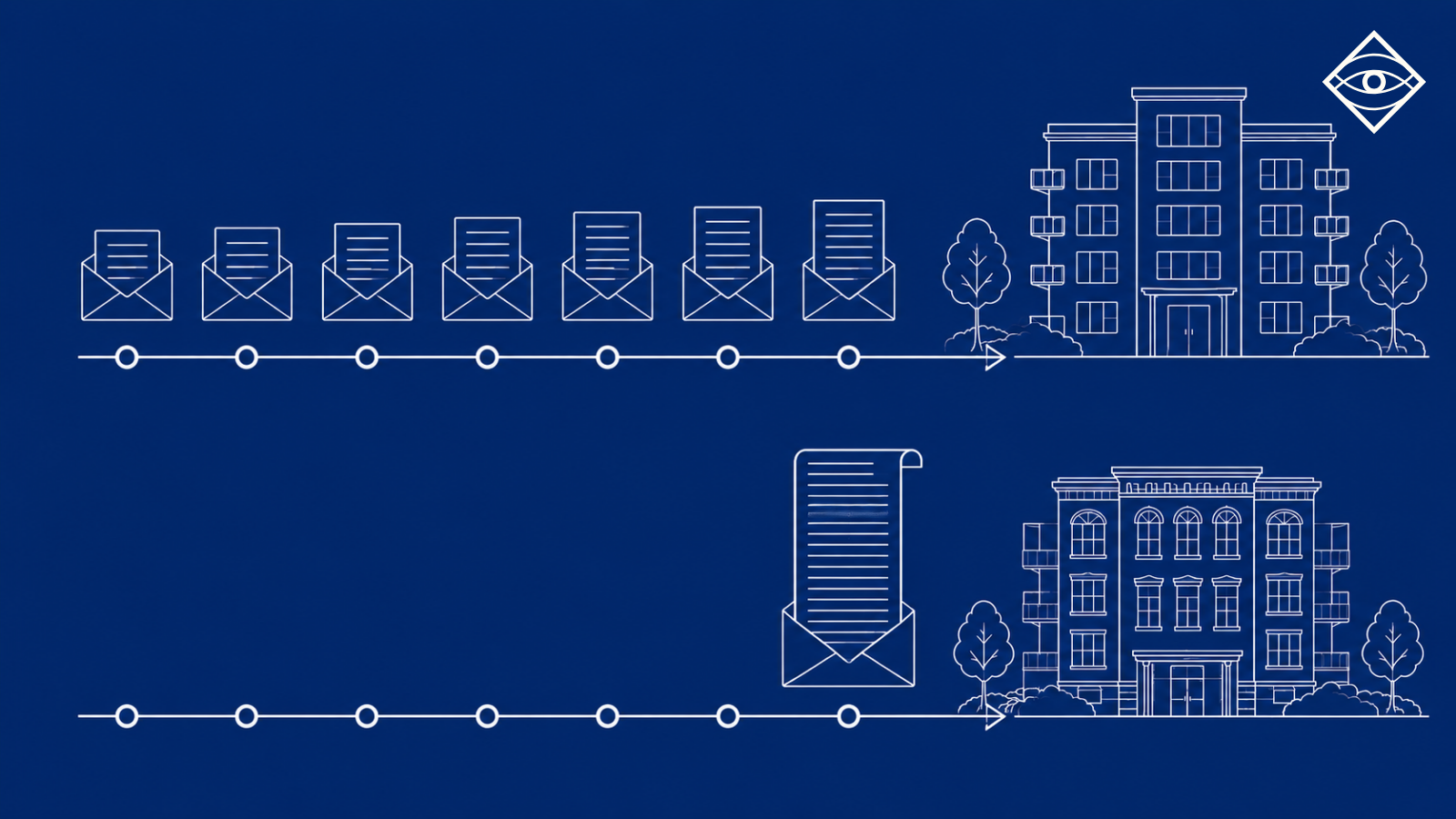
The board with the calmer meeting had spent weeks walking owners through reserve requirements, one plain-language update at a time, before anyone sat down for that vote. The other board waited. It wanted a complete plan, a clear answer, before saying anything to the owners at all.
Waiting for certainty isn’t caution. It’s a decision, and it has a cost.
While that second board finished its research, owners weren’t waiting quietly. They were talking to each other, filling the silence with assumptions, and turning those assumptions into their own version of events before they ever stepped into the room. By the time the board had its answer, the story had already been written without it.
The board that communicated early wasn’t more confident about the numbers. It was more honest about not having them yet. Its update wasn’t “here’s what this will cost.” It was closer to four words: “We don’t know. Yet.”
That sentence feels like an admission of weakness to many boards. In practice, it’s the opposite. Owners can tell the difference between a board that’s hiding something and one that’s still working through the problem out loud. Silence reads as the former, even when it isn’t.
Nearly three in four U.S. community associations are underfunded compared with their own reserve study recommendations, according to an Association Reserves analysis of more than 100,000 studies.
Most boards will eventually have some version of this conversation. The only real choice is whether owners hear it in stages, early and in plain language, or all at once, after the number is already final.
The pattern isn’t limited to reserve funding. Why HOA Board Meetings Feel Repetitive addresses a related problem: how the same information gap that produces one tense meeting tends to produce many more, long after the original issue is resolved.
If your board is watching a shortfall take shape and hasn’t said anything to owners yet, that’s the moment board consulting support matters most — before the silence becomes the story. Why Special Assessments Blindside Boards walks through how this same underfunding pattern builds financially, long before a board ever schedules the meeting to announce it.
Reserve funding is one part of a larger governance challenge. Structural integrity, mortgage eligibility, and the systems boards use to turn professional advice into decisions are increasingly connected.
Continue with long-form articles on reserve funding, special assessments, mortgage eligibility, and the decisions facing condominium and community association boards.
The Well-Run Building is a free program to help condo, co-op, and HOA boards explain structural integrity, reserve funding, and mortgage eligibility before crisis communication is needed.
Board Consulting helps boards clarify decisions, responsibilities, priorities, and the systems needed to move difficult work forward.
You don’t need to have the answer before we talk.